


Microfiber vs. Nanofiber Cleaning Cloths — Which Is Better for Glasses?
If you've ever bought a brand-new pair of glasses and watched them collect tiny scratches within weeks, the cloth you're using is the most likely culprit. Most fabrics — paper towels, t-shirts, tissue paper — contain wood fiber and other coarse materials that scratch the polycarbonate or AR-coated surface of your lenses microscopically every time you wipe.
The right choice is a microfiber cloth, a nanofiber cloth, or a two-in-one weave that combines both. Here's how they differ — and which to pick for your lenses.
Quick Comparison
| Microfiber | Nanofiber | |
|---|---|---|
| Fiber width | ~10 micrometers (1/100th of human hair) | ~100 nanometers (1/1000th of microfiber) |
| Made from | Polyester + nylon/polyamide blend | Nanolon — engineered nanofiber polymer |
| Best for | Wet cleaning, removing oils & smudges | Dry polishing, lifting fine dust & static |
| Texture | Plush, absorbent | Smooth, slightly tacky |
| Reusable | Yes, machine-washable | Yes, but rinse rather than machine wash |
What Is a Microfiber Cloth?
A microfiber cloth is woven from polyester and polyamide (nylon) fibers that are 1/100th the thickness of a human hair. The split-fiber construction creates millions of tiny hooks that grab oils, fingerprints, and skin residue without smearing them — and without scratching the lens.
Microfiber is the right choice when:
- You're cleaning oily smudges or food residue
- You're using a wet lens cleaner like Z Clear Anti-Fog Spray
- The lens is heavily dirty and needs absorbency
What Is a Nanofiber Cloth?
A nanofiber cloth uses fibers ~100 nanometers wide — roughly 1/1000th the diameter of microfiber. The slightly tacky texture acts like a magnet for dust, dander, and static-charged particles. It's the format you've probably seen as "polish cloth" or "lens magic cloth."
Nanofiber excels when:
- You're polishing a dry lens between cleanings
- You want to remove fine dust without using a cleaner
- You're dealing with screens (phone, laptop, watch)
The Two-in-One Solution: Combination Microfiber/Nanofiber Cloths
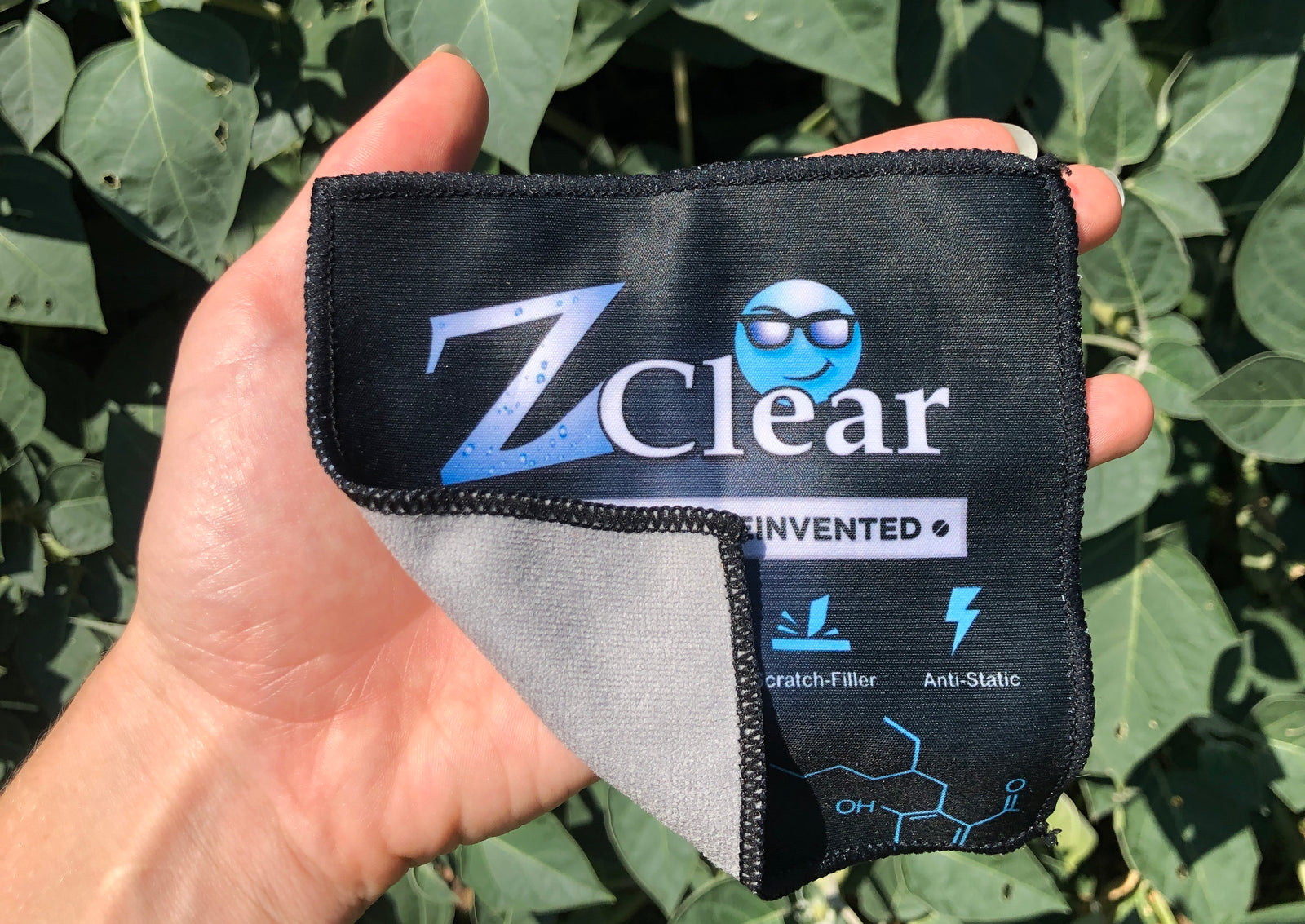
The ideal cleaning cloth uses both fiber types in a single weave — microfiber on one side for wet cleaning and nanofiber on the other for dry polishing. That's exactly what Z Clear's Premium Nano/Microfiber Eyeglass Cleaning Cloth is.
The two-in-one design lets you do the full sequence with one cloth:
- Spray your lens with Z Clear Anti-Fog Spray (or apply Z Clear Anti-Fog Paste)
- Wipe with the microfiber side until oils and smudges are gone
- Flip to the nanofiber side and polish until streak-free
How to Care for Your Microfiber Cloth
A dirty microfiber cloth is worse than no cloth — embedded dust becomes an abrasive. Wash your cloth weekly:
- Cold water, mild dish soap or detergent. Hot water shrinks the synthetic fibers.
- No fabric softener. It coats the fibers and kills the static-attracting properties.
- Air dry. Don't put microfiber in the dryer — heat melts the fibers.
- Don't wash with lint-shedding fabrics like terry-cloth towels. Lint embedded in microfiber is hard to remove.
A well-cared-for cloth lasts 1–2 years. Throw it out when the surface starts to feel slick or matted — that means the fibers have collapsed and it's no longer cleaning effectively.
What to Avoid
- Tissue paper, paper towels, napkins — Wood fibers scratch coated lenses.
- T-shirts and shirt sleeves — Cotton drags grit across the lens.
- Pre-moistened alcohol wipes — Many "lens wipes" sold at airport convenience stores contain isopropyl alcohol, which damages AR coatings over time.
- The corner of your jacket on the chairlift — We've all done it. Stop.
Get the Right Cloth for Your Lenses
Z Clear's Premium Nano/Microfiber Cleaning Cloth is a two-in-one weave designed to pair with Z Clear's anti-fog spray, paste, and wipes. Browse the full Microfiber Cloth & Lens Wipes Collection, or learn more about cleaning AR-coated lenses safely.
Read more in Tips & Tricks: how to stop glasses from fogging up · the correct way to clean your glasses.


Leave a comment (all fields required)